
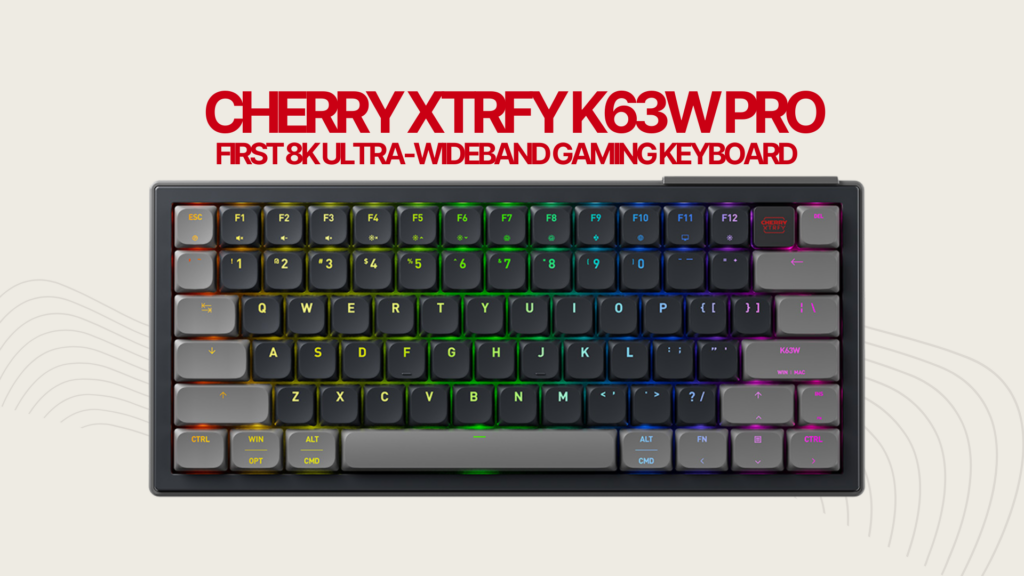
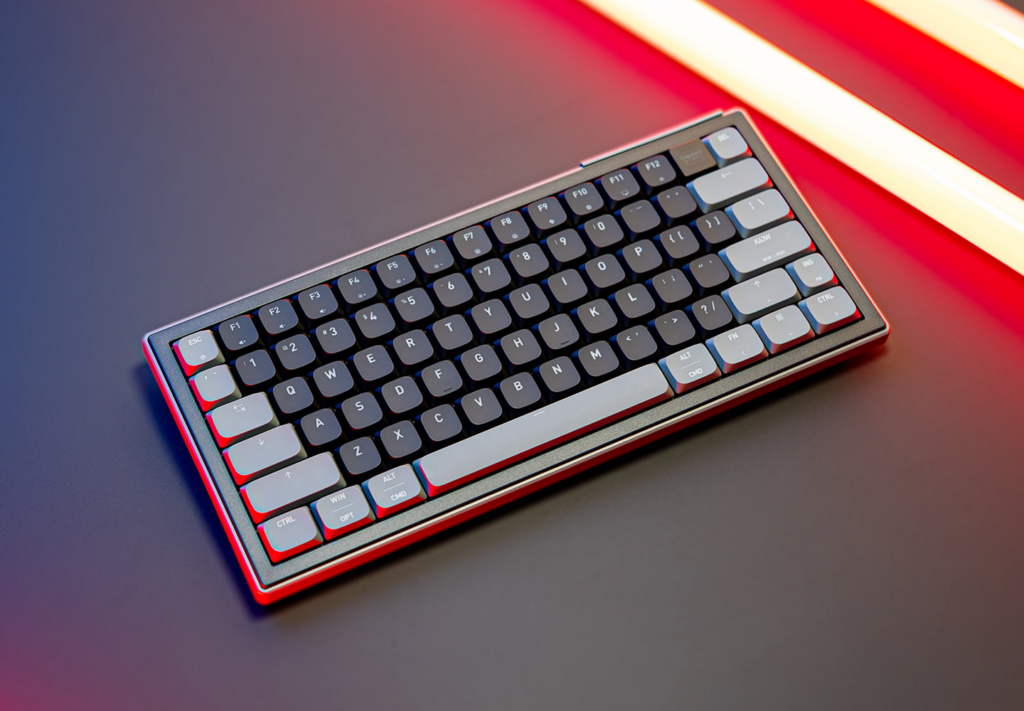
At Computex 2026, Cherry’s gaming brand Cherry XTRFY unveiled the K63W Pro, a compact 70 percent wireless mechanical keyboard that uses Ultra-Wideband (UWB) instead of the usual 2.4 GHz dongle connection. It is positioned as the first gaming keyboard to offer a true 8,000 Hz polling rate both wired and wirelessly using UWB, making it one of the lowest latency wireless options announced so far.
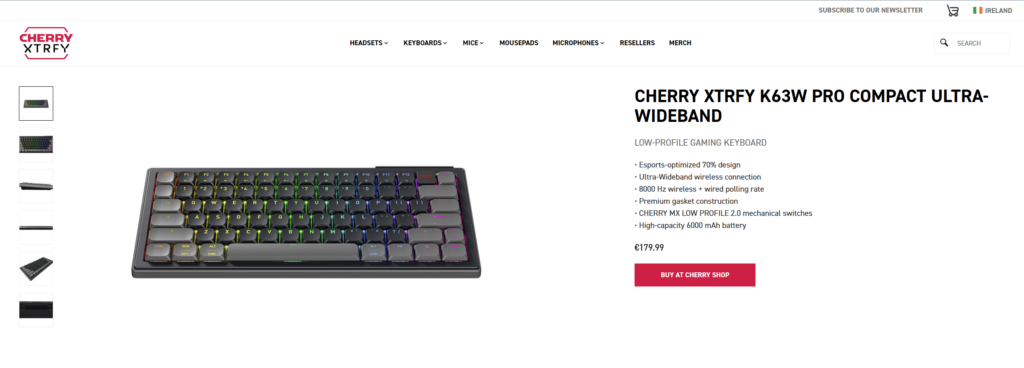
The K63W Pro pairs this wireless tech with a gasket-mounted internal structure, Cherry MX Low Profile 2.0 mechanical switches, per key RGB, full NKRO, and a 6,000 mAh battery that Cherry claims can last up to 1,100 hours depending on settings. For buyers in Europe, it is scheduled to go on sale in early July 2026 for €179.99, with US availability following in August at a suggested price of $169.99.
Ultra-Wideband Wireless On A Keyboard
Ultra-Wideband is a short range wireless technology that sends data using very short, low power pulses across a wide frequency band, rather than a narrow 2.4 GHz channel. In practice, that wider band and different signaling style helps UWB avoid interference from saturated 2.4 GHz environments that are full of Wi-Fi, Bluetooth, and wireless peripheral traffic.
Cherry is using SPARK Microsystems’ LE UWB implementation, which is tuned specifically for low latency, gaming grade peripherals. SPARK and Cherry say the K63W Pro can maintain a true 8,000 Hz polling rate over wireless, with smooth connectivity that stays clear of typical Bluetooth and Wi-Fi congestion in crowded esports venues or multi device home setups.
8,000 Hz Polling Rate And Why It Matters
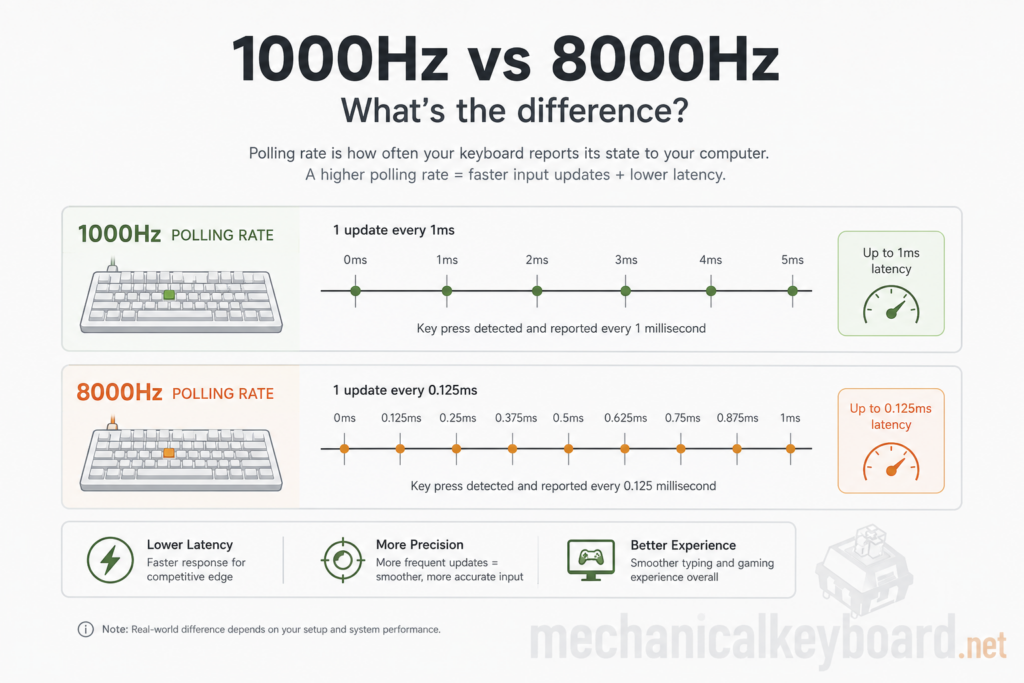
Cherry advertises the K63W Pro with a true 8,000 Hz polling rate in both wired and UWB wireless modes, meaning the keyboard can report key states up to 8,000 times per second, or 8 times every millisecond. That is significantly higher than the 1,000 Hz polling that has been the standard for high end gaming keyboards, and it places the K63W Pro in the same class as recent 8K designs like Keychron’s Q series HE boards and other 8K wireless experiments.
For readers who want a deeper technical breakdown of how polling rate affects latency and input feel, you can check out our dedicated keyboard polling rate guide which explains the differences between 125 Hz, 1,000 Hz, 4,000 Hz, and 8,000 Hz in more detail. In real world use, the jump from 1,000 Hz to 8,000 Hz mostly benefits high level competitive players who want to shave every possible millisecond off key activation, but it also helps keep input timing more consistent when the system is under heavy load.
More Read
Layout, Size And Desk Fit
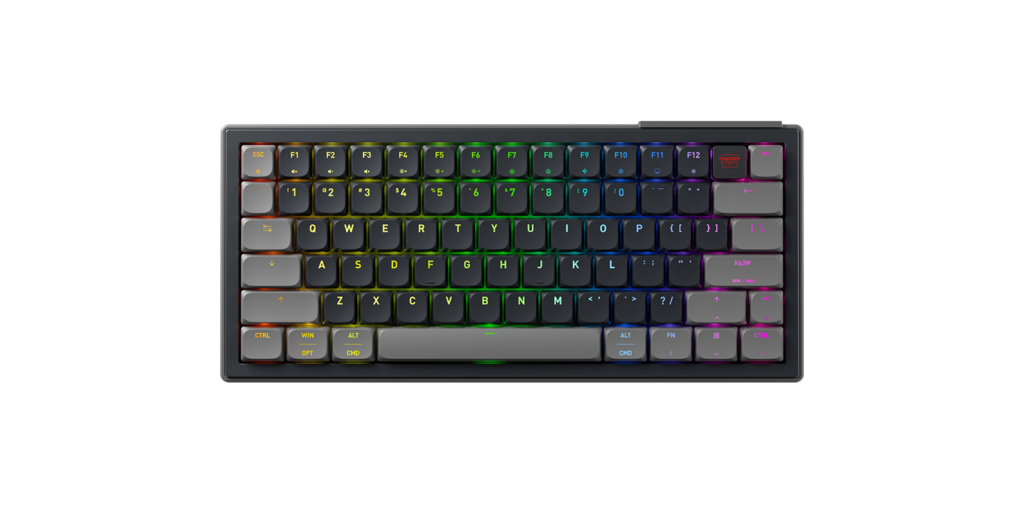
The K63W Pro uses a compact 70 percent layout, which keeps the full function row and arrow keys but trims off the numpad and the single column of navigation keys found on a typical 75 percent board. This gives you more mouse room than a full size board while still preserving the F row and directional cluster that many players rely on for macros, utility binds, or desktop shortcuts.
If you are coming from smaller layouts, our 60 percent keyboard explainer and tenkeyless keyboard guide are good references for how much space different formats save and what keys you lose in each case. The K63W Pro effectively sits between a 60 percent and a TKL in footprint, and that should appeal to FPS and MOBA players who want good mouse clearance without giving up an F row entirely.
Switches, Typing Feel And Acoustics
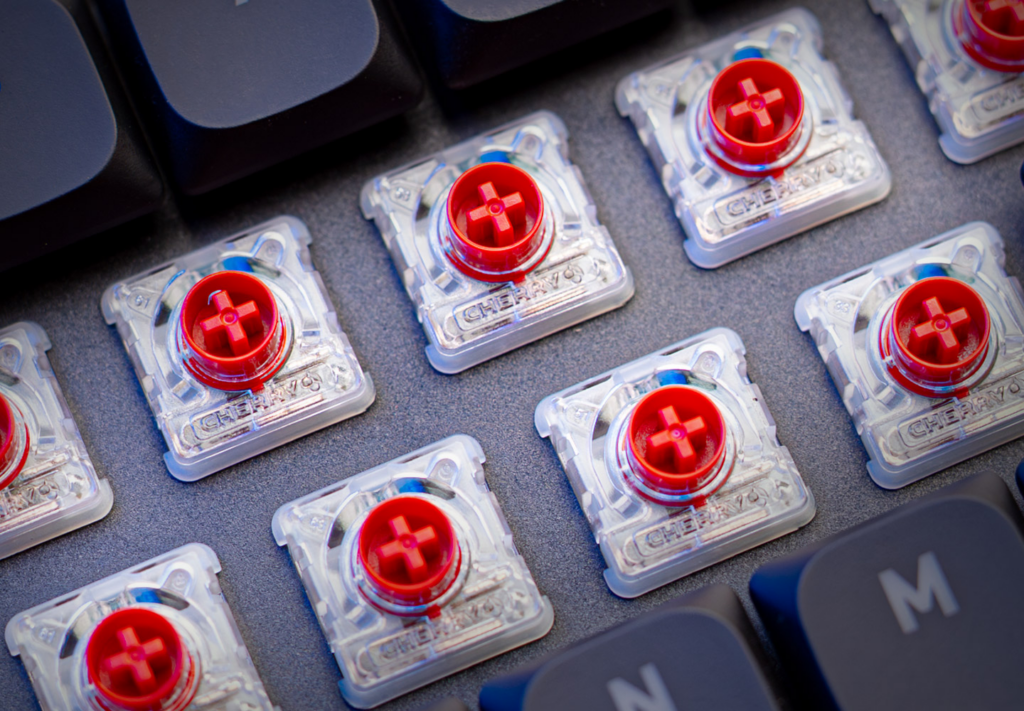
Under the ABS keycaps, the K63W Pro ships with Cherry MX Low Profile 2.0 mechanical switches, which are the latest generation of Cherry’s low profile design. These switches are factory lubricated, linear, and rated for around 100 million actuations, with a shorter total travel than standard MX style switches for faster actuation and a slim chassis profile.
Cherry highlights a carefully tuned gasket construction with multiple layers of dampening inside the case, which should produce softer bottom out, deeper acoustics, and a more muted, modern sound profile compared to older tray mount low profile boards. If you are deciding between low profile, optical, and magnetic switch designs in general, our optical vs mechanical vs magnetic switches guide and switch type explainer walk through the pros and cons of each technology and feel.
Battery Life And Power Efficiency
One of the headline specs on the K63W Pro is the integrated 6,000 mAh battery, which is paired with the energy efficient LE UWB implementation to deliver up to a claimed 1,100 hours of use depending on polling rate and RGB settings. That upper figure assumes lower polling and reduced lighting, so running the keyboard locked at 8,000 Hz with full brightness RGB will reduce endurance, but the capacity is still far above many typical wireless gaming keyboards.
Charging is handled via a detachable braided USB C to USB A cable, and the board can be used in wired mode while charging without dropping performance. Cherry’s positioning is essentially that you can treat it as a wired 8K keyboard when you are plugged in at your main setup, then switch to untethered UWB wireless mode for a cleaner desk or tournament style environment.
Connectivity And NKRO
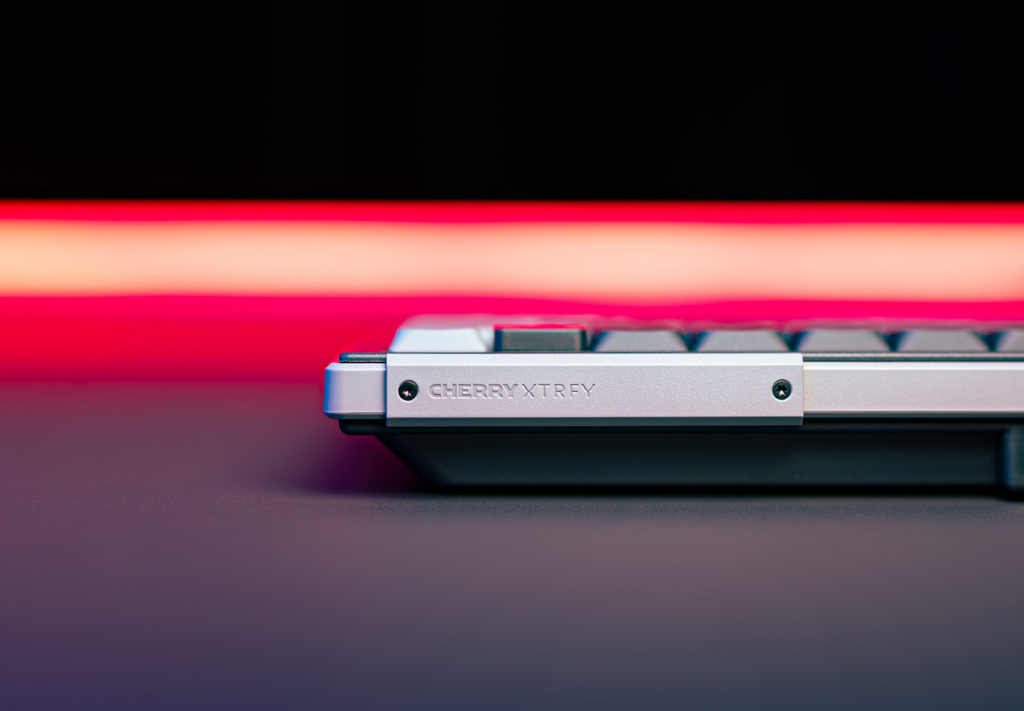
The K63W Pro connects over a dedicated UWB dongle and also supports standard wired USB connectivity, but there is no mention of Bluetooth in the official spec sheets, which signals that this product is focused squarely on low latency PC gaming rather than multi device office pairing. Cherry quotes full N key rollover and 100 percent anti ghosting, which is standard for modern gaming boards, meaning it should register rapid multi key inputs without dropping presses.
If you are new to the concept of rollover and ghosting, our NKRO guide breaks down how many simultaneous key presses different designs can handle and why that matters for rhythm games, fighters, and high action titles.
How It Compares To Other 8K Keyboards
The most direct point of comparison for the K63W Pro is the wave of 8,000 Hz keyboards that still rely on traditional 2.4 GHz wireless or wired only connections, such as Keychron’s Q HE 8K series and other recent high polling designs. Those boards already show that 8K polling can be achieved in practice, but Cherry’s pitch is that moving to UWB provides a cleaner, less congested wireless spectrum along with better power efficiency at those extreme polling rates.
For more context on another 8K focused lineup, you can read our coverage of Keychron’s Q HE 8K series, which targets a different buyer segment with full height hall effect switches and heavy customization. And if you are interested in cutting edge switch tech combined with magnetic sensing, our news piece on the Lofree Hyzen mechanical magnetic keyboard shows how brands are experimenting beyond classic MX style designs.
Pricing, Availability And Who It Is For
Cherry has confirmed that the XTRFY K63W Pro will launch in Europe in early July 2026 with a recommended price of €179.99, followed by a US launch in August at $169.99, with availability through both online channels and retail partners. Asian market rollout will be announced separately, but early reports mention that details will vary by region.
At that price, the K63W Pro is clearly aimed at competitive PC gamers and enthusiasts who prioritize input latency and wireless reliability over extras like premium PBT keycaps or hot swap sockets, which are not highlighted in the current spec sheets. If you mainly play fast FPS titles, battle royales, or arena shooters and you like low profile layouts, the combination of UWB, an 8K polling rate, and a gasket mounted chassis makes this one of the most technically ambitious wireless keyboards announced in 2026 so far.
Early Takeaway
The Cherry XTRFY K63W Pro is not just another incremental refresh with a new coating or slightly tweaked switches, it is one of the first keyboards to genuinely rethink how wireless links are handled by moving to Ultra-Wideband for 8K polling. On paper it promises wired level responsiveness, improved wireless stability in congested environments, and long battery life in a compact, low profile form factor that suits both gaming and daily typing.
As with any first generation tech, the real verdict will come after independent testing for latency, range, software, and build consistency, but the spec sheet makes the K63W Pro one of the most interesting wireless gaming keyboards to watch in the second half of 2026. If you want to prepare for its arrival, now is a good time to read up on keyboard polling rate, NKRO, and switch technologies so you can decide whether an 8K UWB board is worth the premium for your setup.