

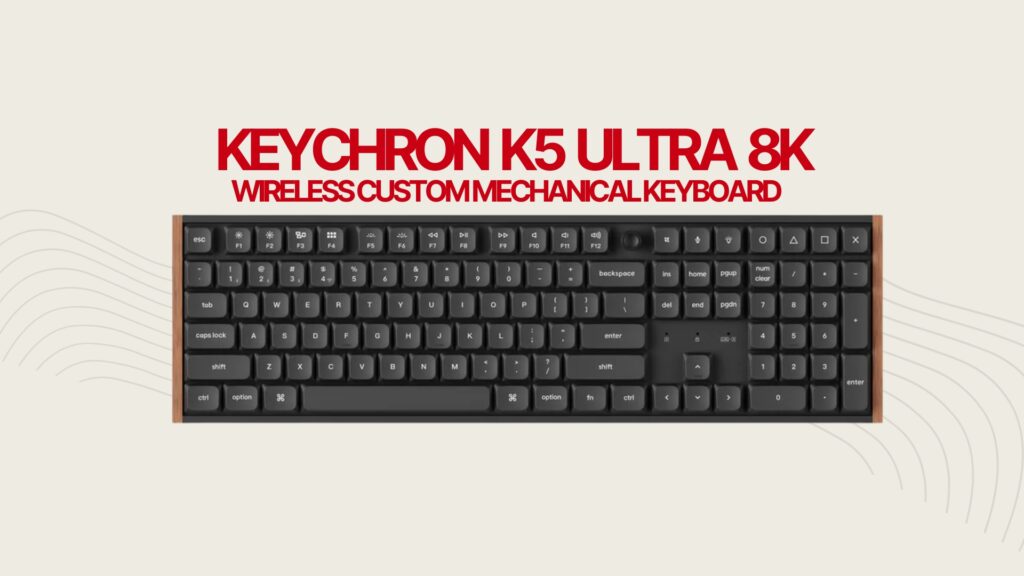
Keychron has released the K5 Ultra 8K, a full-size low-profile mechanical keyboard that delivers 8000 Hz polling over both 2.4 GHz wireless and wired USB-C. At $114.99, it undercuts the base ASUS ROG Falchion ($149-170) and the wired-only Wooting 80HE ($300+) while matching their polling performance.
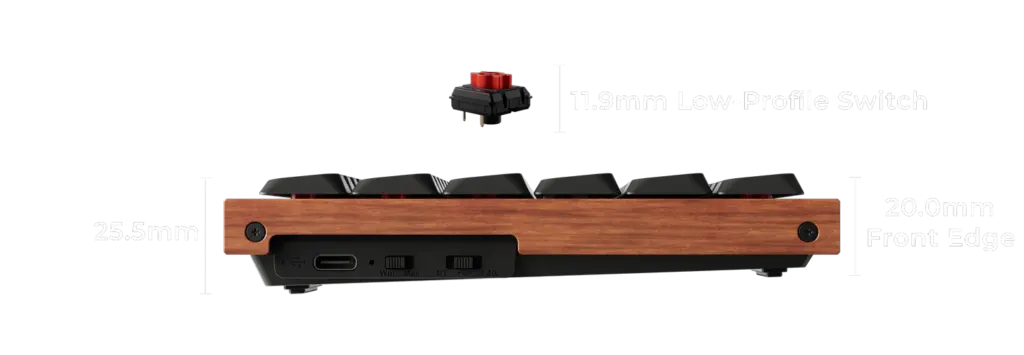
The K5 Ultra 8K launched on July 11, 2026 and follows the K4 Ultra, K10 Ultra, and V10 Ultra in Keychron’s growing Ultra lineup. It is available now in black on Keychron.com and Amazon US.
Design and Build
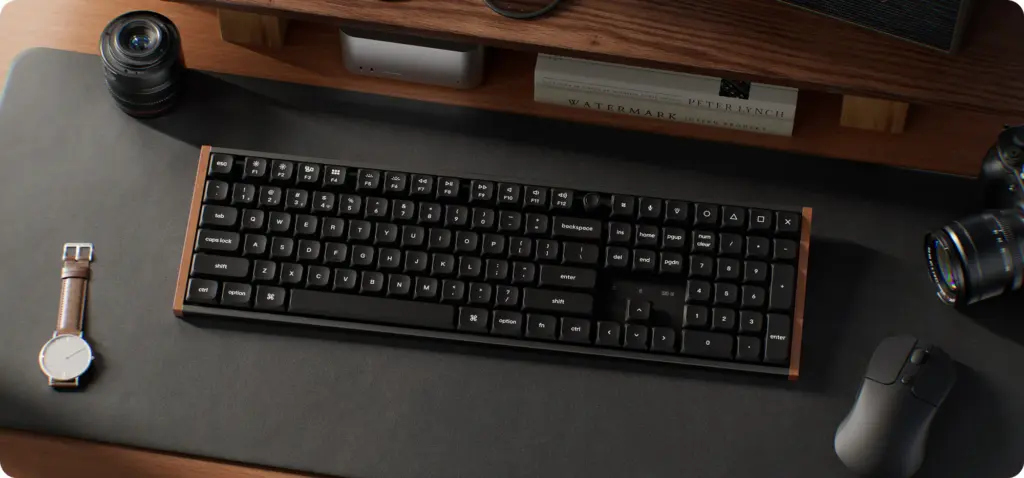
The K5 Ultra 8K uses a full 100 percent layout with a dedicated numpad, a top-right rotary knob (volume by default, remappable), and a macro row above the numpad. The chassis measures 436.6 x 128.29 mm with a front height of just 15.55 mm.
Build quality mixes materials: an anodized aluminum top plate, ABS plastic base, and natural wood side panels. Two-stage flip-out kickstand feet let you adjust the typing angle. The board weighs 720 grams (about 1.59 lbs).
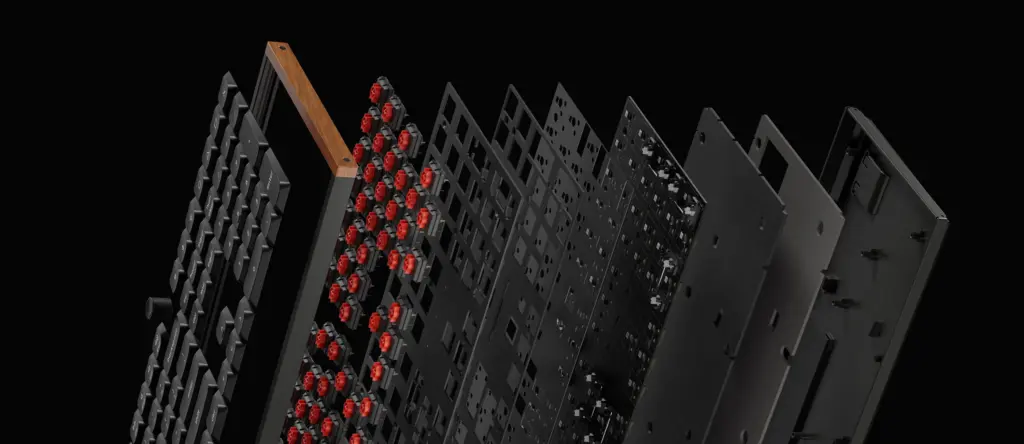
Inside, Keychron layers IXPE foam, EPDM foam, and PET film to reduce typing noise and vibration. The keycaps are LSA-profile double-shot PBT, and the box includes both macOS and Windows keycap sets.
Switches
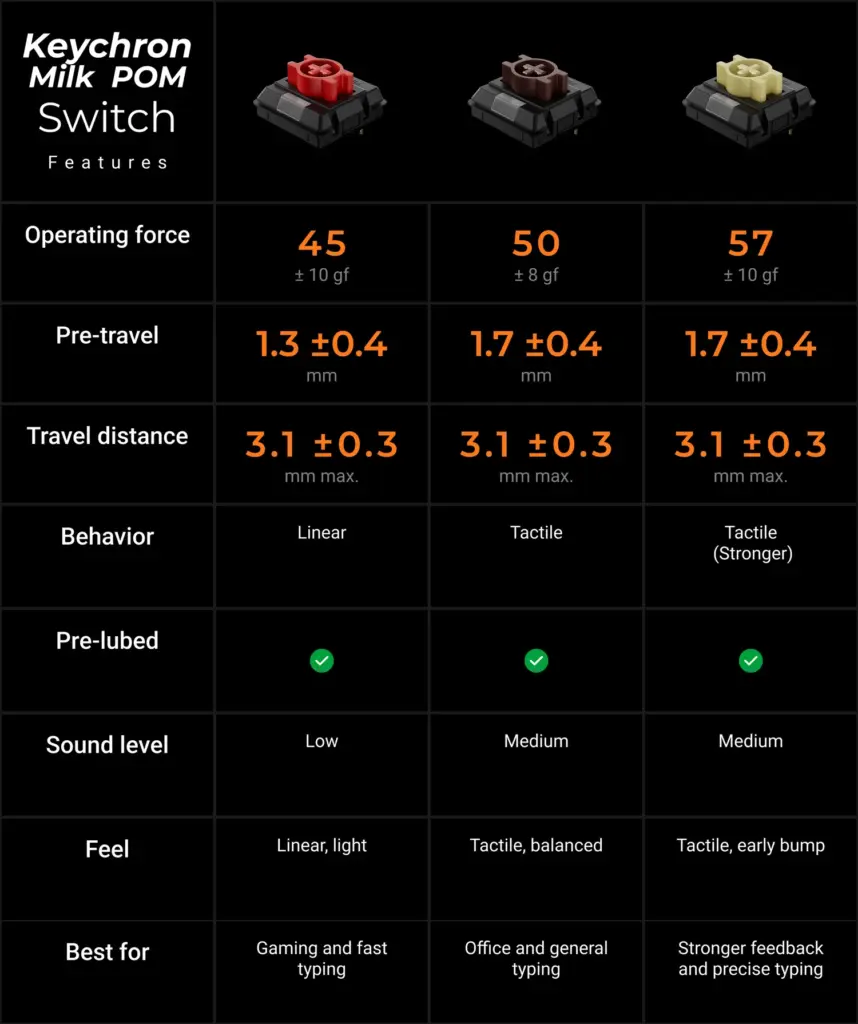
The K5 Ultra 8K ships with Keychron’s self-lubricating Milk POM low-profile switches in three variants:
More Read
- Red (linear, 45 gf actuation, 1.3 mm pre-travel)
- Brown (tactile, 47±8 gf, 1.7 mm pre-travel)
- Banana (strong tactile, 57 gf, 1.7 mm pre-travel)
All three offer 3.1 mm total travel and are hot-swappable with Gateron Low-Profile 2.0 pin compatibility.
A meaningful distinction here: these are traditional mechanical switches, not Hall Effect or magnetic sensors. That means no rapid-trigger feature. If you are deciding between technologies, my optical vs mechanical vs magnetic switches guide covers the differences.
Connectivity and 8K Polling
The headline feature is the 8000 Hz polling rate, available over both 2.4 GHz wireless and wired USB-C. Historically, hitting 8K required a physical cable, so seeing it work wirelessly is genuinely notable. Bluetooth 5.2 is also on board for pairing up to three devices, though Bluetooth runs at standard polling rates.
Firmware is ZMK (open source). Remapping, macros, and per-key RGB all run through Keychron’s browser-based Launcher web app (Chrome and Edge supported). No desktop software needed.
To put the 8K spec in context: the theoretical latency improvement over standard 1000 Hz polling is about 0.875 ms. That is below human perception for most typing and casual gaming but can matter in competitive play. I cover this in detail in my keyboard polling rate explained article.
Battery Life
Keychron cites up to 370 hours on 2.4 GHz with RGB off, powered by a 2,600 mAh battery. That is shorter than some other Ultra-series boards, which makes sense given the higher power draw of a full-size board running 8K wireless.
RGB and Lighting
North-facing RGB LEDs support over 22 lighting effects, all customizable through the Launcher app with per-key adjustment available.
Competitive Positioning
At $114.99, the K5 Ultra 8K is aggressively priced. Most boards with 8K polling use Hall Effect or TMR sensors and target the gaming crowd. The K5 goes a different direction with traditional low-profile mechanical switches, a full-size layout with a numpad, and wireless freedom. That makes it compelling for someone who wants the lowest latency available but also needs a real typing board for productivity.
For comparison, Keychron’s own Q HE 8K series offers 8K polling with TMR magnetic switches in all-aluminum chassis starting at $230+, but those are wired only.
How It Compares to Predecessors
The K5 Ultra 8K is a significant leap from the standard K5 and K5 Pro. Here is what changed:
| Spec | K5 / K5 Pro | K5 Ultra 8K |
|---|---|---|
| Polling rate (wired) | 1000 Hz | 8000 Hz |
| Wireless | Bluetooth only (wireless) + USB-C (wired) | 2.4 GHz + Bluetooth |
| Firmware | QMK/VIA | ZMK + Launcher |
| Battery | 2,000 mAh | 2,600 mAh |
| Acoustic foam | Minimal | IXPE + EPDM + PET |
| Price (launch) | $70-100 | $114.99 |
How It Stacks Up Against Competitors
| Keyboard | Price | Polling | Connection | Switch Type |
|---|---|---|---|---|
| Keychron K5 Ultra 8K | $115 | 8K | Wireless + Wired | Mechanical (low-profile) |
| ASUS ROG Falchion (base) | $149-170 | 1K | Wireless + Wired | Mechanical |
| Wooting 80HE | $300+ | 8K | Wired only | Hall Effect |
| Keychron Q HE 8K | $230+ | 8K | Wired only | TMR Magnetic |
Pros and Cons
Pros
- True 8000 Hz polling over wireless 2.4 GHz, not just wired
- Full-size layout with numpad and macro row for productivity users
- Hot-swappable low-profile switches with Gateron LP 2.0 compatibility
- ZMK firmware with browser-based customization, no install required
- macOS and Windows keycap sets included in box
- Aggressive $115 pricing undercuts every other 8K board
- Excellent battery life at 370 hours with RGB off
Cons
- No rapid-trigger or adjustable actuation (traditional mechanical, not Hall Effect)
- Low-profile switches limit aftermarket keycap compatibility
- Bluetooth runs at standard polling rates only
- No desktop software option if you prefer offline config
- Full-size layout is not ideal for compact desk setups
Who Should Buy This
The K5 Ultra 8K fits three reader profiles particularly well:
Programmers and office workers who type all day and want a full-size low-profile board with genuine wireless 8K speed will find the layout and battery life compelling. The numpad and macro row add real productivity value.
Hybrid work-and-gamers who need one board for both office tasks and competitive gaming will appreciate the low latency without sacrificing a traditional typing feel. The K5 gives you 8K performance without the analog learning curve of Hall Effect boards.
Low-profile enthusiasts who have been waiting for a full-size wireless option with top-tier polling speeds finally have a native choice from Keychron’s Ultra lineup.
If you need rapid trigger, per-key actuation tuning, or a compact layout for travel, look at the Q HE 8K series or a Wooting alternative instead.
My Thoughts
The K5 Ultra 8K is an interesting release because it does not chase the rapid-trigger, Hall Effect trend. Instead, it brings premium wireless 8K performance to a traditional low-profile format that office workers, programmers, and numpad-reliant users will actually appreciate. At $115, it undercuts everything else with an 8K polling rate by a wide margin.
That said, it is worth addressing the skepticism around 8K polling in enthusiast circles. Some users argue that 4K is already sufficient for competitive play and that 8K can flood the CPU with unnecessary interrupts for marginal real-world gain. There is truth to that: the theoretical latency drop from 8K over 4K is under half a millisecond. But the K5 is not marketed purely on latency — it is about future-proofing and feature parity at a price point that makes the debate academic. If you do not need 8K, the board still delivers excellent battery life, a solid build, and ZMK flexibility at a fair price.
The trade-off is clear: you get the latency advantage of 8K without the analog features (rapid trigger, adjustable actuation) that magnetic switch boards offer. For competitive gamers who need those features, a board from the Q HE 8K series or a Wooting alternative makes more sense. For anyone else who wants a fast, good-looking, full-size wireless keyboard with excellent battery life, this is hard to beat.
Where to Buy
The Keychron K5 Ultra 8K is available now : Keychron.com at $114.99
International availability on Keychron’s own site covers EU, UK, and other regions.
FAQ
Does the Keychron K5 Ultra 8K have rapid trigger? No. The K5 uses traditional mechanical Milk POM switches, not Hall Effect or magnetic sensors. Rapid trigger requires analog magnetic sensing, which this board does not support.
Is the K5 Ultra 8K good for gaming? Yes, for most gamers. The 8000 Hz wireless polling rate delivers genuinely low input latency. Competitive players who rely on rapid trigger or per-key actuation tuning should look at Hall Effect boards instead.
What is the difference between the K5 Ultra 8K and the K5 Pro? The K5 Ultra 8K adds 8000 Hz polling (up from 1000 Hz), 2.4 GHz wireless connectivity, a larger battery, enhanced acoustic foam, and ZMK firmware with browser-based customization. The standard K5 Pro uses QMK/VIA and runs at standard polling rates.
Does the K5 Ultra 8K work on Mac and Windows? Yes. The keyboard ships with both macOS and Windows keycap sets in the box and supports both operating systems out of the box via the hardware profile switch.
What switches does the K5 Ultra 8K use? Keychron’s self-lubricating Milk POM low-profile switches in Red (linear), Brown (tactile), or Banana (strong tactile). All are hot-swappable and compatible with Gateron Low-Profile 2.0 pin specs.
Can I customize the key mapping and RGB? Yes. The keyboard runs ZMK open-source firmware. All customization happens through the browser-based Keychron Launcher web app, which supports Chrome and Edge. No desktop software installation is required.
How long does the battery last? Keychron rates the 2,600 mAh battery at up to 370 hours of use on 2.4 GHz wireless with RGB off. Real-world results depend on your polling rate, backlight settings, and usage patterns.
Is 8000 Hz polling really noticeable? The theoretical latency improvement over 1000 Hz is about 0.875 ms, which is below human perception for most users. Competitive players in fast-paced shooters may perceive the difference, but for everyday typing and casual gaming, the gains are marginal.