
Quick Verdict: TL;DR
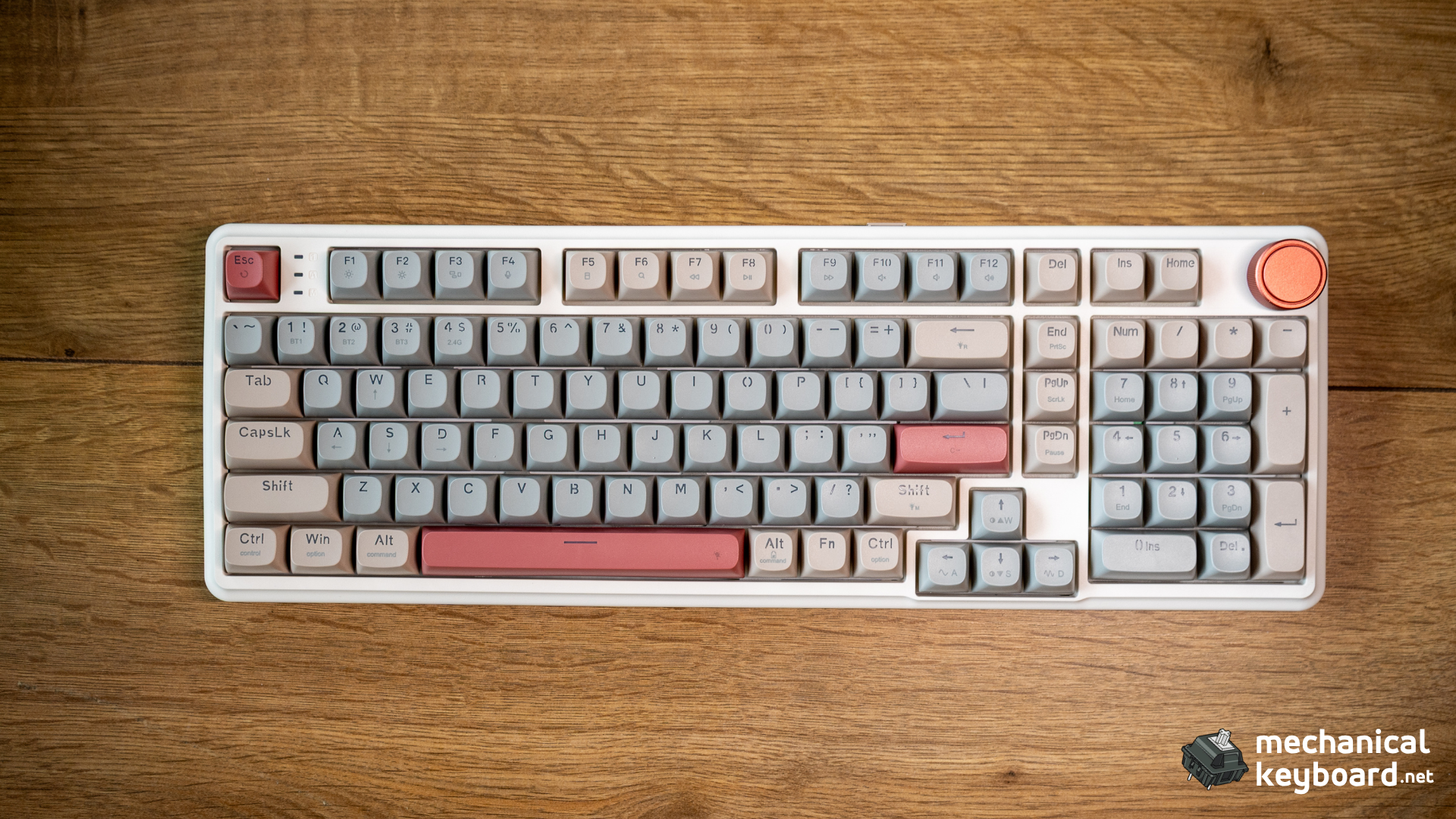
The Redragon EISA K768 is a 100-key wireless gasket-mounted keyboard with Yolk Linear switches, tri-mode connectivity (USB-C, 2.4GHz, Bluetooth 3.0/5.0), an 8000mAh battery, hot-swap sockets, and a dedicated control knob. It costs $64.99 and is available in Lilac Land and the colorway we tested, Retro Cocoa, a cream base with dark cocoa-red accents.
- Quick Verdict: TL;DR
- Naming: What This Board Is Actually Called
- Specs at a Glance
- Unboxing and First Impressions
- Build Quality
- Yolk Linear Switches: What We Know and What We Don’t
- Typing Experience and Sound Test
- Software
- Wireless and Battery
- Gaming and Everyday Use
- How It Compares
- Honest Critique: What the Marketing Does Not Say
- Verdict
- Where to Buy
- FAQ
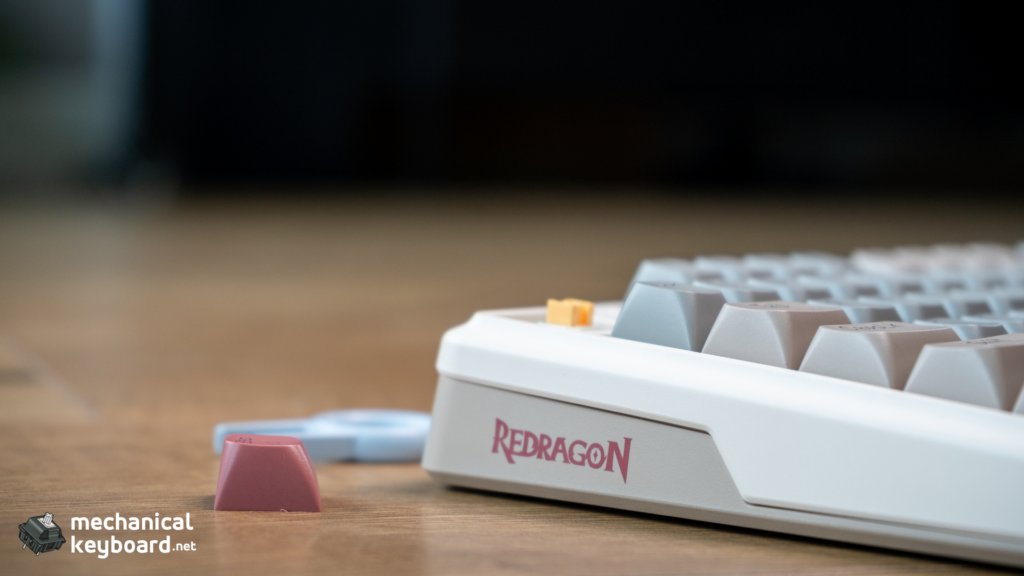
Is it worth it? At $64.99, this is a budget board, and it’s built like one, plastic case, no aluminum, no fancy sensor tech. What it gets right is the fundamentals: a real gasket mount, a genuinely useful knob, a big battery, and a colorway that doesn’t look like every other gamer board on the shelf. For the price, and given it’s a genuinely full-size board with a proper numpad, it earns its keep.
Best for: Buyers who want a numpad without a full-size footprint, budget shoppers who still want gasket-mount typing feel, anyone who wants a keyboard that looks different from the standard black RGB rectangle.
Skip if: You want a metal build, you need per-key precision or magnetic switches, you’re chasing a specific documented switch spec sheet (Redragon hasn’t published one for this switch), or you want a board that sounds great straight out of the box without any modding.
Bottom line: The Redragon EISA K768 is a solid, unglamorous budget pick. It doesn’t try to be a premium board and doesn’t pretend otherwise, real gasket mount, real hot-swap, a genuinely distinctive colorway, and a battery that should hold up fine for typical use. The stock sound is where it shows its price, a bit clicky and sharp out of the box, and basic modding gets you a deeper, more controlled sound if that matters to you. At $64.99 with a full numpad, that’s a fair trade.
Naming: What This Board Is Actually Called
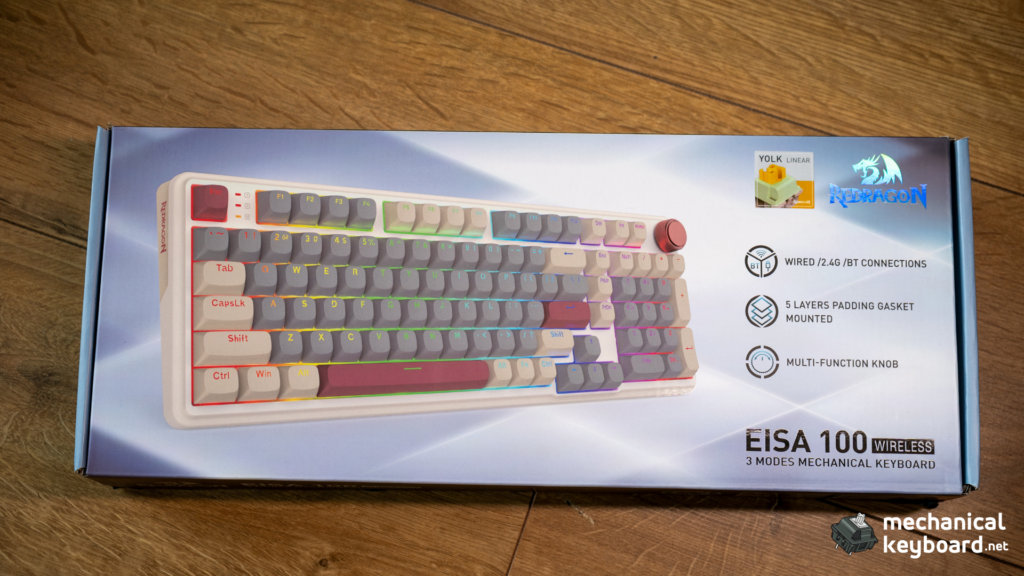
Worth sorting out up front, because even Redragon’s own channels don’t agree. The box says EISA 100. The product URL and on-page title say EISA K768. Some listings, including Amazon’s, call it K768 PRO. And Redragon’s own site uses a “Standard vs Screen Edition” toggle where “PRO” is supposed to mean the version with a display, except Amazon’s K768 PRO listing shows no screen at all in its own product images.
Here’s what we can say with confidence: EISA K768 and EISA 100 are the same board, K768 is the internal model number, EISA 100 is the marketing name. Beyond that, “PRO” is inconsistently applied across Redragon’s own retail channels, on redragonshop.com it appears to gate a screen variant, on Amazon it’s used for what looks like the same non-screen board we’re reviewing here. We’re not going to assert a clean two-tier story we can’t fully back up. If you’re shopping for this exact board, in this exact colorway, look for Retro Cocoa, that’s the one unambiguous identifier across every listing we checked.
Specs at a Glance
| Spec | Detail |
|---|---|
| Layout | 100 keys, compact footprint (Redragon markets this as “100% function, 20% smaller”) |
| Switches | Custom Yolk Linear |
| Switch specs | Not published by Redragon, no force/travel/durability datasheet exists for this specific switch |
| Connectivity | USB-C wired / 2.4GHz / Bluetooth 3.0 & 5.0 (tri-mode) |
| Battery | 8000mAh |
| Mount | Gasket mount |
| Dampening | 5 layers: 3.5mm PO foam, IXPE switch foam, PET sound pad, bottom socket foam, silicone bottom pad + gasket |
| Extra control | Multi-function knob (volume, play/pause, backlight brightness) |
| Hot-swap | Yes, rated for 3-pin and 5-pin switches |
| Keycap material | PBT |
| Case | Plastic |
| Dimensions | 16.18 x 5.55 x 1.77 inches |
| Weight | 1.13 kg |
| Software | Redragon’s configuration software (download via redragonshop.com), no confirmed product name |
| Colours | Lilac Land, Retro Cocoa |
| Price | $64.99 |
Unboxing and First Impressions
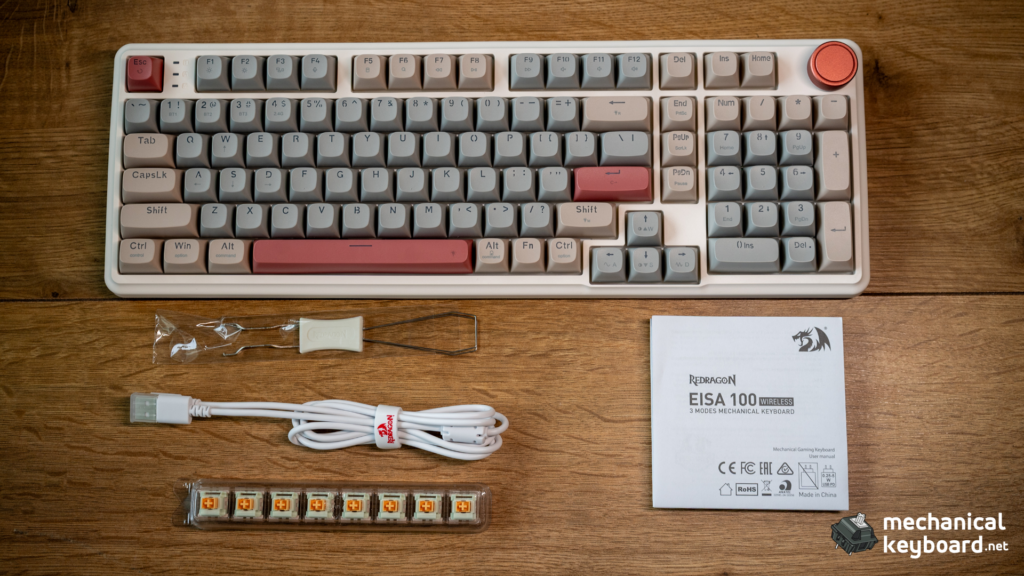
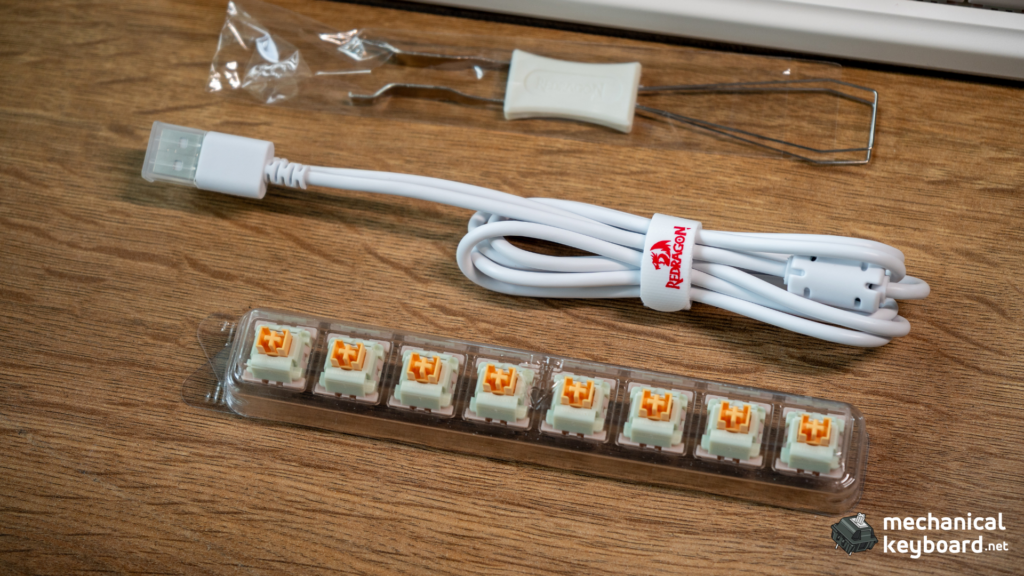
The box includes the keyboard, a combined keycap and switch puller tool, a white USB-C cable with a Redragon-branded velcro strap, a printed user manual, and a strip of 8 spare Yolk Linear switches. No wireless dongle is visible in the flat-lay, likely stored in a slot underneath the keyboard itself, common on Redragon’s tri-mode boards, worth confirming and correcting if that’s not the case on your unit.
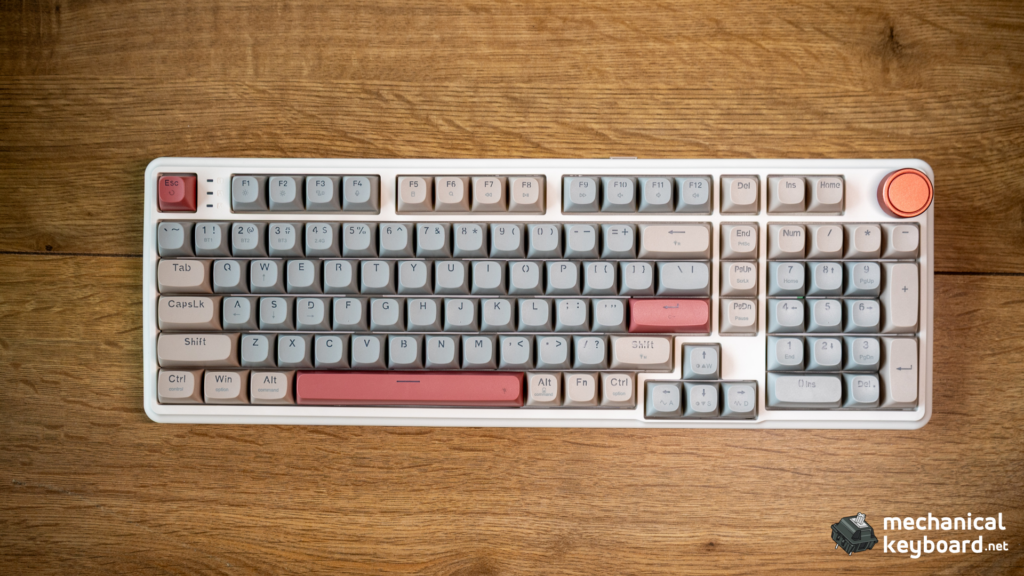
The Retro Cocoa colorway is the headline here. It’s a cream/off-white base with dark cocoa-red accents on the accent keys and knob, and it holds up well in hand, a warmer, softer look than the usual black gamer aesthetic. The typing feel on first contact is on the sharper, clickier side rather than soft or muted, a first impression that carries through the rest of testing.
Build Quality
Gasket Mount and Foam Stack
There’s a little bit of flex in the case, and typing feels okay out of the box, but this isn’t a board that sounds its best straight out of the factory. Basic modding, extra foam, a tape mod, that kind of thing, is what it takes to get a deeper, more controlled sound out of this gasket mount. Redragon’s own copy promises a “soft, cushioned typing feel,” and the gasket mount does soften the landing, but don’t expect the deep, muted sound some gasket boards deliver stock.
This is a plastic case, no aluminum plate, consistent with the $64.99 price point. There’s a little bit of flex if you press hard, but no rattle out of the box, solid enough for the price even if it’s not going to feel premium.
Stabilizers
Stabilizers are decent, nothing to complain about, nothing that stands out either, right where you’d expect a budget board to land.
Yolk Linear Switches: What We Know and What We Don’t
The EISA K768 ships with Redragon’s Custom Yolk Linear switch. Here’s the honest state of the published information: Redragon has not released a datasheet for this switch. No force numbers, no travel numbers, no durability rating anywhere on their own product pages or in press materials.
One thing worth flagging directly: there’s a different switch called “HMX Egg Yolk Linear” from an unrelated switch manufacturer that shares “Yolk Linear” in the name and does have published specs (42gf actuation, 3.6mm travel). That is not this switch. Don’t let anyone, including us, accidentally cite those numbers for the Redragon board.
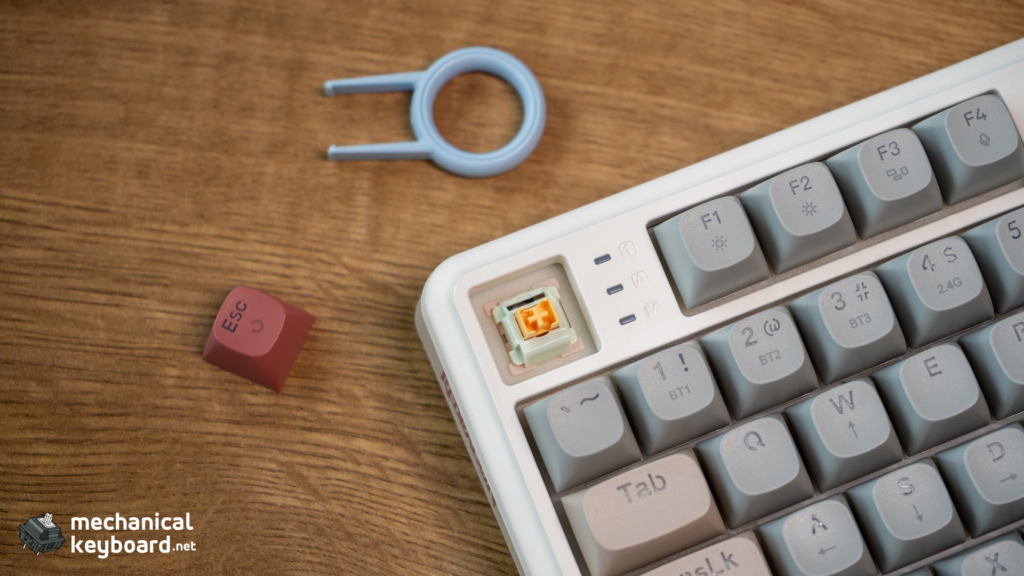
What we can describe instead is feel and sound from testing: it lands somewhere between creamy and clicky, not the smooth, muted linear feel Redragon’s marketing language (“thick-lubed,” “cushioned rich linear travel,” “silky creamy and cozy”) suggests on its own. There’s a sharper edge to it out of the box than that copy implies, consistent with what we noted in unboxing.
Note: Redragon’s own site copy is inconsistent even on the switch’s name, some sections of their product page call it “Custom Yolk Linear Switch,” others on the same page call it “Custom Dragon Chant Switch.” Your physical box prints “Yolk Linear” as the switch-spec sticker, which is what we’re going with, but worth a one-line mention in the article itself since “dragon chant switch” gets real search volume too, people are clearly finding both names.
Typing Experience and Sound Test
On Monkeytype, we sustained 95 WPM, a solid, unremarkable result consistent with a board that types fine but isn’t tuned for speed the way a lighter, more precise switch would be. The overall feel matches what we noted above, somewhere between creamy and clicky, sharper than the marketing copy suggests, and noticeably improved with basic modding.
Sound test: We haven’t recorded a dedicated sound test clip yet, add one here once available, this is exactly the kind of section where a short video does more work than a paragraph of description.
Software
The EISA K768 supports Redragon’s configuration software, distributed as a download called Redragon_K768-WL_Software from redragonshop.com, for macros, custom keybindings, and lighting effects. Redragon doesn’t give this a proper branded name the way Akko has “HUB,” it’s just the software for this specific model.
Wireless and Battery
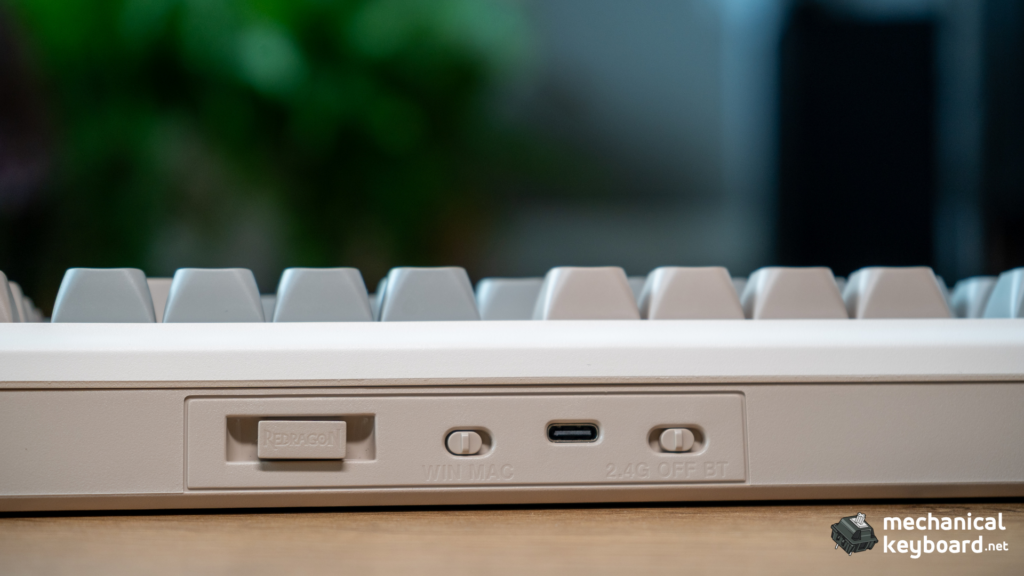
The 8000mAh battery is smaller than the 10,000mAh batteries we’ve seen on recent Akko boards, but still a reasonably sized cell for this price tier. We didn’t run a full multi-week drain test on this unit, so we won’t put an exact number on it, but based on the capacity and typical usage patterns, expect moderate battery life, enough for comfortable multi-day use between charges with RGB on, longer with it off. Nothing here suggests it’s class-leading, and nothing suggests it’s a weak point either, treat this as a reasonable estimate rather than a tested claim, we’ll update with real numbers if we run the full test.
Gaming and Everyday Use
This isn’t a rapid-trigger or magnetic-switch board, so it’s not chasing competitive FPS players the way our TMR reviews do. Where it earns its keep is everyday, full-function use, the numpad is a real one, not a compressed afterthought, and having full number-row and function-key access without hunting through Fn layers makes it a genuinely good daily driver for anyone doing spreadsheet work, data entry, or general productivity alongside gaming. Good, straightforward, does what a full-size board should do.
How It Compares
| Board | Price | What it does differently |
|---|---|---|
| Redragon EISA K768 (this board) | $64.99 | Gasket mount, tri-mode, 100 keys in a compact footprint, no aluminum |
| Redragon EISA K768 “PRO” (per Amazon) | Similar | Same core specs per Amazon’s own listing, “PRO” naming inconsistent across retailers |
| Redragon EISA K768 Screen Edition (per redragonshop.com) | Slightly higher | Adds a display, unconfirmed beyond what’s on the product page |
| Redragon EISA K686 PRO | Similar tier | 98-key, different switch (Linear Red), different colorway (Blue Himmel) |
| Redragon EISA MAX | Similar tier | 98-key gasket hot-swap, part of the same EISA family |
We haven’t reviewed the K686 PRO or EISA MAX ourselves, so those two rows are naming/positioning only, not a specs comparison, worth a future piece if there’s reader demand.
Honest Critique: What the Marketing Does Not Say
- No published switch specs. Force, travel, and durability numbers for the Yolk Linear switch don’t exist anywhere official. If precise switch feel matters to you, that’s genuinely unknowable before you buy, this isn’t us withholding info, it isn’t published.
- The stock sound doesn’t match the marketing copy. Redragon’s “silky creamy” language oversells it, the out-of-box feel sits closer to clicky and sharp, with a little case flex. Basic modding closes that gap, but don’t expect a deep, muted sound straight out of the box.
- Naming across Redragon’s own channels is genuinely inconsistent. Worth knowing before you buy from a specific retailer expecting a specific feature set.
- Plastic case at this price is expected, not a knock, but don’t go in expecting the Q1 Max’s build quality.
- Overall, a decent board rather than an exceptional one. Nothing here is broken or disappointing, it just doesn’t punch above its price the way the strongest budget boards do.
Verdict
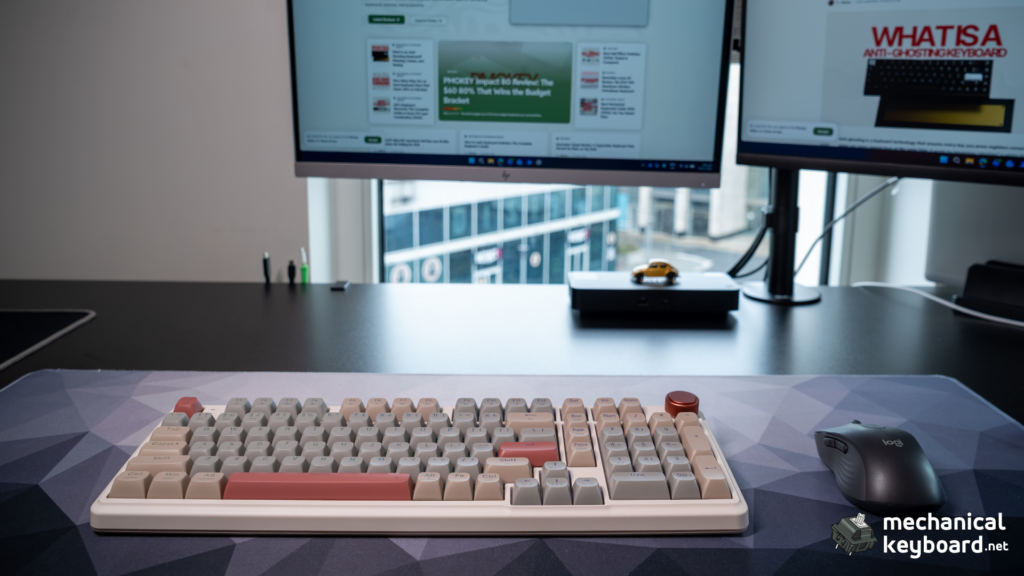
At $64.99, the Redragon EISA K768 does what a budget full-size board should do: real gasket mount, real hot-swap, a genuinely distinctive Retro Cocoa colorway, a big enough battery, and a full numpad that makes it a solid daily driver, not just a gaming board. The tradeoffs are exactly where you’d expect them at this price, a plastic case with a little flex, a stock sound that’s clickier and sharper than Redragon’s marketing suggests, and switch specs that simply aren’t published anywhere.
It’s not a standout, and we’re not going to pretend it competes with boards twice its price. But for what it costs, and for buyers who specifically want a compact-footprint full-size board with a numpad, it’s a fair, honest recommendation with basic modding closing most of the gap between how it sounds stock and how good it could sound.
Where to Buy
| Source | Price | Notes |
|---|---|---|
| Redragon official (redragonshop.com) | $64.99 | Direct, often has active discount codes |
| Amazon | Similar | Check which variant/listing name is being used |
FAQ
What is the difference between the Redragon EISA K768 and EISA K768 PRO?
This is genuinely unclear across Redragon’s own retail channels. On redragonshop.com, “PRO” appears to refer to a Screen Edition with a display. On Amazon, a listing called “K768 PRO” shows the same specs as the standard board with no screen visible. If a specific feature (like a screen) matters to you, check the listing images directly rather than relying on the name alone.
Is the EISA K768 the same as the EISA 100?
es. EISA 100 is the marketing name printed on the box, EISA K768 is the model number used in the product URL and most retail listings. Same board.
What switch does the Redragon EISA K768 use?
Yolk Linear, a Redragon custom switch. No published force/travel/durability specs exist for it, and it shouldn’t be confused with the unrelated “HMX Egg Yolk Linear” switch from a different manufacturer.
Is the Redragon EISA K768 worth it?
or the price, yes, especially if you want a full-size board with a real numpad. It’s not going to wow you on build or stock sound, but the fundamentals, gasket mount, hot-swap, tri-mode, a distinctive colorway, are solid for $64.99.
Does the Redragon EISA K768 have hot-swap sockets?
Yes, rated for both 3-pin and 5-pin switches.
How long does the battery last?
We haven’t run a full battery drain test on this unit. Based on the 8000mAh capacity, expect moderate, reasonable battery life for multi-day use between charges, not class-leading, but not a weak point either. We’ll update this with tested numbers if we run the full test.
Is Redragon a good brand?
Redragon is one of the more established budget gaming peripheral brands, known for aggressive pricing and a broad product line. Quality varies by product tier, and this board reflects that pattern fairly well, solid fundamentals for the price, with some rough edges (stock sound, switch documentation) that show exactly where the budget cuts were made.